Skip to content

Sophie’s Beany Shakshuka

Sophie Gastman

Effort:
Complexity:
Cost:
In season now

Serves: 4

Prep time: 10 mins

Cook time: 35 mins

Ingredients:

For the shakshuka:

1 tbsp olive oil

1 onion, diced

1 large red pepper, deseeded and chopped into chunks

1 fresh green chilli, sliced (optional)

2 x 400g tins plum tomatoes

1 1/2 tbsp tomato puree

1 tsp rose harissa paste

4 tbsp water, plus an extra 100-120ml

3 garlic cloves

1 tsp ground coriander

1 tsp smoked paprika

1/2 tsp ground cumin

1 tsp fine sea salt, or to taste

1/2 tsp pepper

700g jar butter beans (or 2 x 400g tins), drained and rinsed

4 eggs

Flaky sea salt, for sprinkling (optional)

A handful of fresh parsley or fresh coriander (or a mix of both), chopped

Crusty bread or fluffy pitta breads, to serve (use gluten-free, if needed)

For the tahini sauce:

120g tahini

4 tbsp lemon juice

1 garlic clove, minced

A pinch of salt

6 tbsp water (or more as needed)

Share:

Recipe kindly donated by Sophie Gastman from her new book "Find Your Healthy".

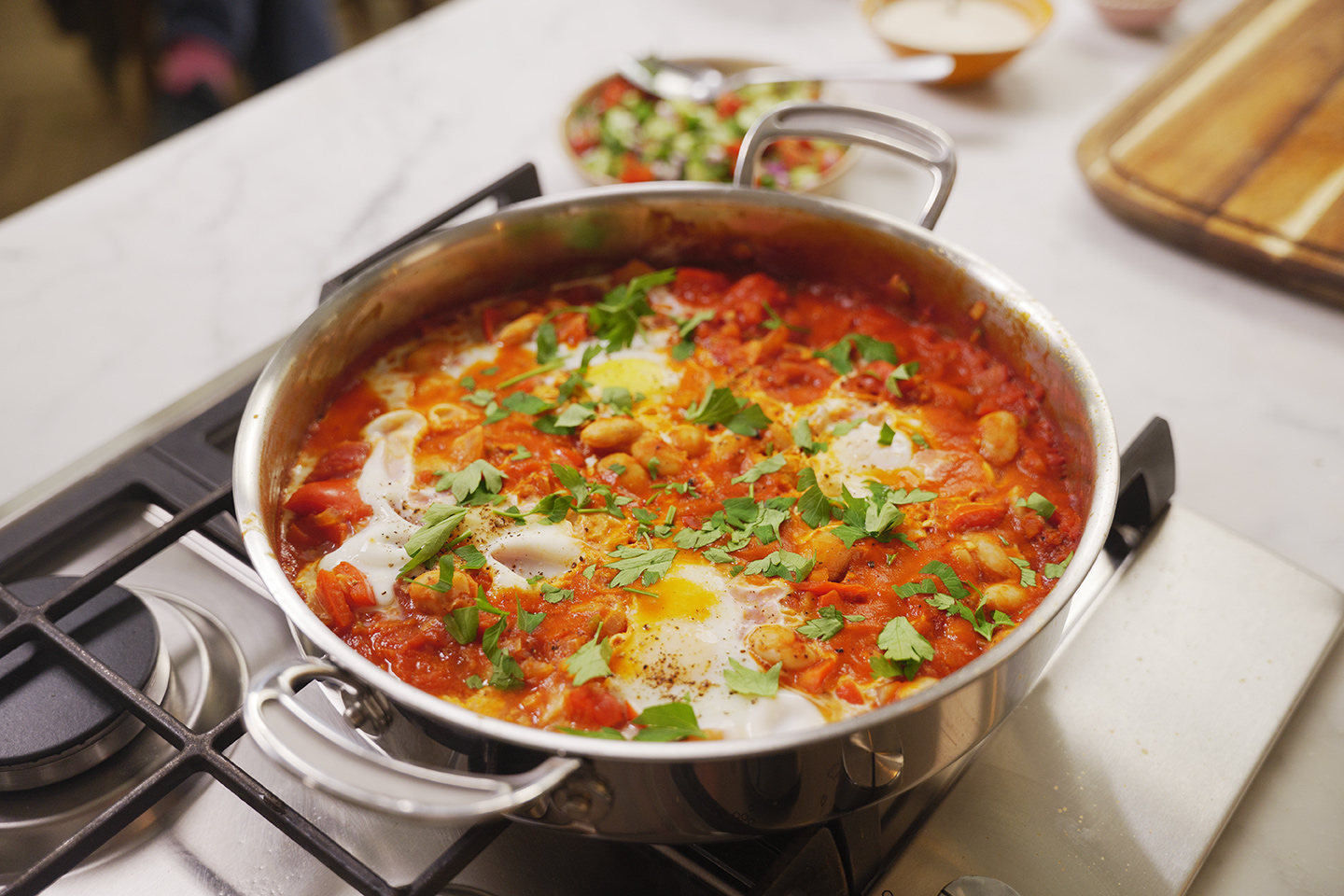
A shakshuka is something I’ll always order when I’m out for brunch: eggs poached in a spicy tomato sauce with crusty bread to mop it all up is just far more exciting than bog-standard eggs on toast. This version gets a fibre boost from the (non-traditional) addition of butter beans.

Method:

Cook the shakshuka base:

Heat the olive oil in a large pan over a medium heat. Add the onion and cook for 5 minutes until soft and translucent.

Add the red pepper, green chilli (if using) and plum tomatoes. Crush the tomatoes with a spoon to break them down and stir to combine.

In a small bowl, mix the tomato puree and harissa paste with the 4 tablespoons of water until dissolved, then stir in to the pan along with the garlic.

Add the ground coriander, smoked paprika, cumin, salt and pepper. Mix well and cook for 5 minutes.

Add the butter beans and mix. Pour in enough of the remaining 100-120ml of water to just cover the sauce. You can swill the empty tomato tins with the water to get every last bit of the tomatoes.

Simmer, uncovered, over a low-medium heat for 15-20 minutes, or until the sauce thickens slightly. Add more water if the sauce becomes too thick.

Cook the eggs:

Create 4 wells in the sauce using the back of a spoon and crack an egg into each well.

Cover the pan and cook for 5-7 minutes, until the egg whites are just set but the yolks are still runny. Sprinkle the yolks with a little flaky sea salt.

Make the tahini sauce:

In a small bowl, whisk the tahini, lemon juice, garlic and a pinch of salt.

Gradually add the cold water, whisking until smooth, creamy and pourable but still thick.

Serve:

Spoon the shakshuka onto serving dishes, drizzle generously with the tahini sauce and top with the chopped parsley and/or coriander.

Serve with crusty bread or fluffy pittas and a simple chopped tomato, cucumber and red onion salad seasoned with a generous amount of pepper.


WANT TO…

Make it vegan? Skip the eggs and add extra butter beans or tofu or tempeh.

Store the leftovers? The tomato base will keep in the fridge for up to 3 days. Reheat gently on the hob or microwave and poach fresh eggs before serving. The tahini sauce can be stored in the fridge for up to 5 days.

Use up leftover tahini sauce? Drizzle over chicken shawarma, or try over salad or veggies!

Make it less spicy? Omit the green chilli and halve the harissa paste.

Engaging Kids

Engaging Kids

Kids who engage regularly with veg through veg-themed activities, such as arts and crafts, sensory experiences, growing and cooking are shown to be more likely to eat the veg they engage with. Encouraging kids to engage and play with veg is the handy first step to them developing a good relationship with veg and life-long healthy eating.

Kids in the kitchen

Kids in the kitchen

The eventual aim, if possible, is to get kids in the kitchen. Don’t worry, this doesn’t have to mean they are with you from start-to-end creating mess and rising stress levels! It can be as simple as giving them one small job (stirring, measuring, pouring, grating, chopping…) ideally involving veg. They can come in to do their little bit, and have fun with you for a few minutes. Getting them involved, making it playful and praising them plenty for their involvement, perhaps even serving it as dinner they “made”, makes it much more likely they will eat the food offered, not to mention teaching them important life skills. Find ideas, safety tips, videos and even a free chart in our Kids in the Kitchen section here.

Activities

Activities

While getting kids to interact with veggies for real and using their senses to explore them is best, encouraging hands off activities like arts & crafts, puzzles & games or at-home science experiments can be a great start, particularly for those who are fussier eaters or struggle with anything too sensory. Use these veg-themed activities as a stepping stone to interacting with the veg themselves. We have loads of crafty downloads here, puzzles here, and quirky science with veg here.

Sensory

Sensory

Once you feel your child is ready to engage a little more, you can show them how to explore the veg you have on hand with their senses, coming up with playful silly descriptions of how a veg smells, feels, looks, sounds and perhaps even tastes. Find ideas, videos and some simple sensory education session ideas to get you started here.

Serving

Serving

The moments before food is offered can be a perfect opportunity for engagement that can help make it more likely a child will eat it! Giving children a sense of ownership in the meal can make a big difference to their feelings going into it and the pride they take in it. You know your child best, but if you aren’t sure where to start, we have some fun and simple ideas for easy roles you can give them in the serving process over here.

Sophie Gastman nutritionist

Sophie Gastman

Sophie Gastman is a Registered Nutritionist (RNutr, Public Health), speaker, and author who’s passionate about making nutrition simple and enjoyable. With a background in children’s health and experience delivering national school food and nutrition programmes, she now shares evidence-based nutrition tips and recipes to an online community of over 300,000 followers, with a focus on challenging misinformation and promoting a more balanced, realistic approach to food.

www.youtube.com/@sophiethenutritionist

Similar recipes

Rupy’s Huevos Rancheros

Effort: 1
Complexity: 1
Cost: 1

Dr Rupy Aujla

Claire’s Bean & Egg Chimichangas

Effort: 2
Complexity: 2
Cost: 1

Claire Thomson

white chicken bean chilli

Mel’s White Chicken & Bean Chilli

Effort: 3
Complexity: 2
Cost: 2

Melissa Hemsley

Emily’s Chilli Con Carne Stuffed Peppers

Effort: 2
Complexity: 2
Cost: 2

Emily Leary