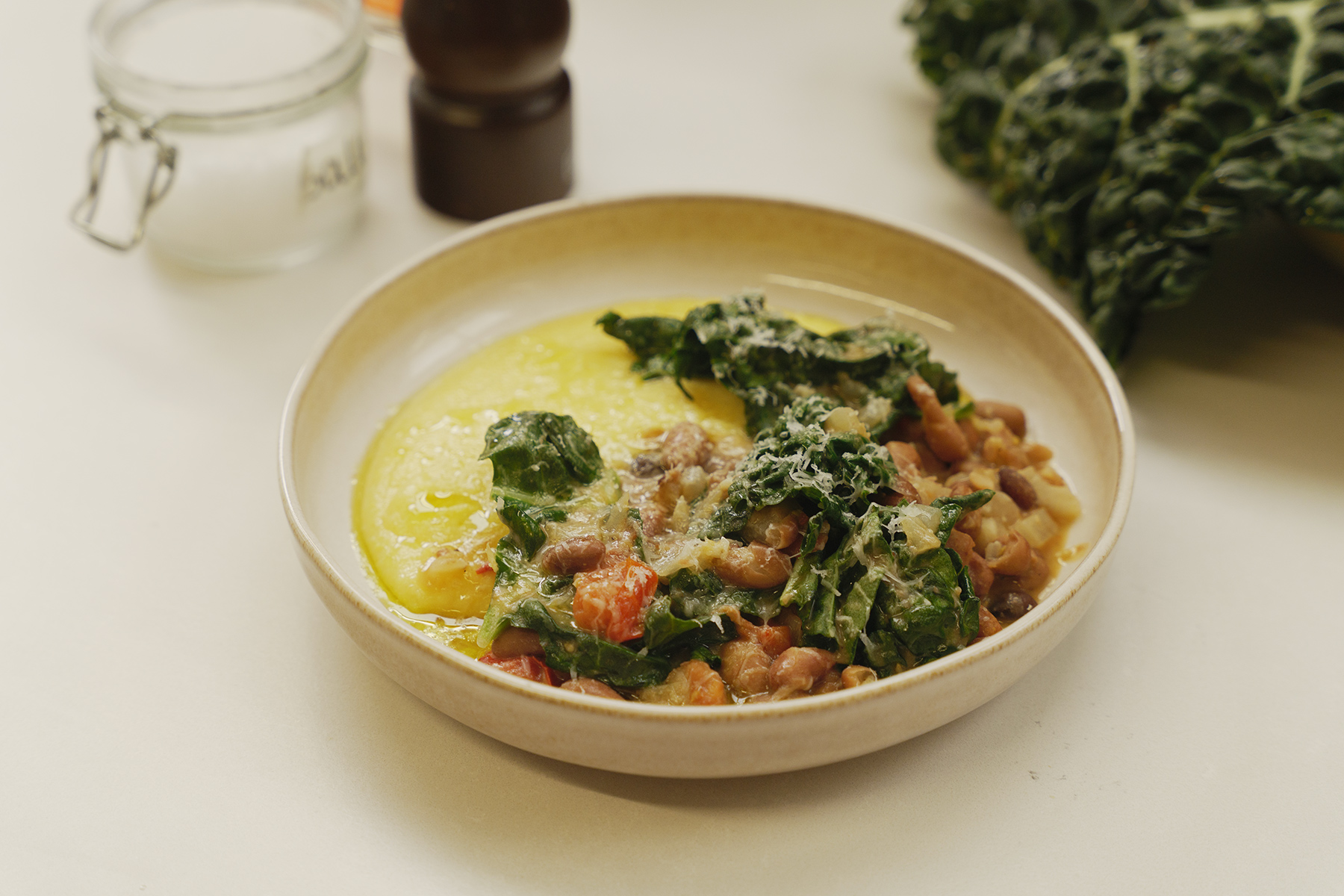
Ben’s Cavolo Nero, Borlotti, Polenta & Parmesan

Serves: 4
Prep time: 10 mins
Cook time: 25 mins (+ overnight soaking and cooking if using dried beans)
Ingredients:
200g dried borlotti beans (or 2 good tins, drained)
1 onion, finely sliced
2 garlic cloves, thinly sliced
A pinch of dried chilli flakes (optional)
100g cherry tomatoes, sliced
3 tbsp extra‑virgin olive oil
400g spring greens, cavolo nero or chard, trimmed
Sea salt & black pepper
Polenta:
150g quick‑cook polenta
750ml water or light vegetable stock
30g butter
50g finely grated Parmesan, plus extra to serve
Method:
Cook the beans
If using dried beans, soak overnight, then simmer in well‑salted water until tender. Drain, keeping a little of the cooking liquid. (If using tinned, just rinse well.)
Build the base
Warm the olive oil in a wide pan over a gentle heat. Add the onion and cook slowly for 10 minutes, until soft and sweet. Stir in the garlic and chilli and cook for a minute more.
Add the beans and tomatoes with a splash of their liquid and bring to a gentle simmer. Season lightly.
Fry the greens in olive oil until just wilted- 5 minutes.
Make the polenta
Bring the water or stock to the boil, season well, then rain in the polenta, whisking continuously. Cook according to the packet, stirring often, until smooth and soft.
Finish with the butter and Parmesan. It should be loose and spoonable.
To serve
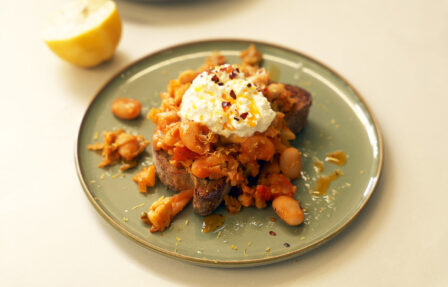
Spoon the polenta onto warm plates, pile the beans and greens on top, and finish with plenty of Parmesan and a generous drizzle of olive oil.

Engaging Kids
Kids who engage regularly with veg through veg-themed activities, such as arts and crafts, sensory experiences, growing and cooking are shown to be more likely to eat the veg they engage with. Encouraging kids to engage and play with veg is the handy first step to them developing a good relationship with veg and life-long healthy eating.

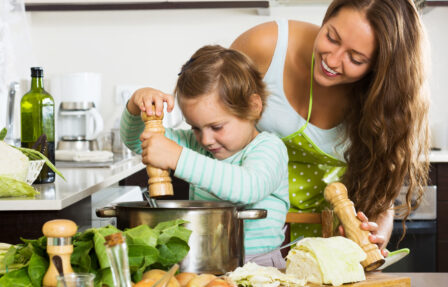
Kids in the kitchen
The eventual aim, if possible, is to get kids in the kitchen. Don’t worry, this doesn’t have to mean they are with you from start-to-end creating mess and rising stress levels! It can be as simple as giving them one small job (stirring, measuring, pouring, grating, chopping…) ideally involving veg. They can come in to do their little bit, and have fun with you for a few minutes. Getting them involved, making it playful and praising them plenty for their involvement, perhaps even serving it as dinner they “made”, makes it much more likely they will eat the food offered, not to mention teaching them important life skills. Find ideas, safety tips, videos and even a free chart in our Kids in the Kitchen section here.

Activities
While getting kids to interact with veggies for real and using their senses to explore them is best, encouraging hands off activities like arts & crafts, puzzles & games or at-home science experiments can be a great start, particularly for those who are fussier eaters or struggle with anything too sensory. Use these veg-themed activities as a stepping stone to interacting with the veg themselves. We have loads of crafty downloads here, puzzles here, and quirky science with veg here.

Sensory
Once you feel your child is ready to engage a little more, you can show them how to explore the veg you have on hand with their senses, coming up with playful silly descriptions of how a veg smells, feels, looks, sounds and perhaps even tastes. Find ideas, videos and some simple sensory education session ideas to get you started here.

Serving
The moments before food is offered can be a perfect opportunity for engagement that can help make it more likely a child will eat it! Giving children a sense of ownership in the meal can make a big difference to their feelings going into it and the pride they take in it. You know your child best, but if you aren’t sure where to start, we have some fun and simple ideas for easy roles you can give them in the serving process over here.
Similar recipes